

Coach Paul Sahota’s forthcoming book, Peaceful Mind Power, begins with a clear idea: inner peace belongs in an ambitious life. The book is for people who want to meet difficult moments with greater clarity, stay close to what matters, and pursue a more purposeful path.
This article introduces that book and the publishing journey behind it. Peaceful Mind Power is Paul’s first full book as a published author. It follows an earlier contribution, a collaborative volume he wrote with other coaches. The two projects sit on the same path. They are also different kinds of work.
A guide for people who want both calm and drive
You can be grateful for what you have built and still want a calmer way to meet what comes next. When the mind is occupied by pressure, old patterns, or uncertainty, it can be harder to hear what matters most.
Peaceful Mind Power is written as a thoughtful guide for that situation. Its subtitle names the aspiration at the center of the work: master your mind and transform challenges into blessings. Treat that line as the book’s idea, a way of meeting difficulty, rather than a result anyone can promise. The useful claim is more modest. Purposeful growth can start with the way you meet the moment in front of you.
Paul is a transformational coach whose work brings timeless spiritual principles together with practical coaching tools. He writes about inner wisdom, self-awareness, and the choices that can help daily life feel more purposeful and balanced. The book’s guiding idea matches the one on his site: when your inner world is aligned, your outer life can reflect what matters most.
That is why the book speaks to conscious achievers. Outer progress still matters. So does the quality of the inner life that has to carry it. Peaceful Mind Power holds those two concerns together instead of asking the reader to choose between them.
An earlier book, written with other coaches
Before this full book, Paul was already part of a published project. He co-authored The Power of Life Coaching (Book 2) with Barbara Wainwright and many other coaches.
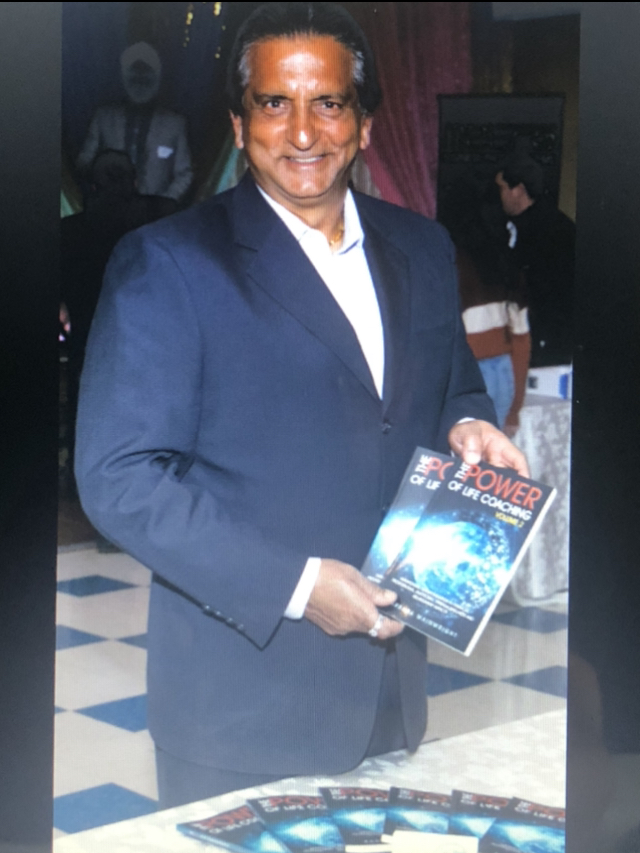
A collaborative book gathers many coaches in one volume. The reader hears a range of voices, each contributing to a shared collection. Space for any one author is limited by design, because the point of the project is the chorus.
A full book works in the opposite direction. It gives one author the room to develop a complete argument, returning to the same ideas across a longer stretch of pages. The reader stays with one through-line instead of moving from contributor to contributor.
That is a difference of form. The earlier project remains part of Paul’s published work. Peaceful Mind Power does not erase it. It offers a larger canvas for a single, sustained conversation with the reader.
The first full book
Peaceful Mind Power is Paul Sahota’s first full book as a published author. The wording is worth keeping precise. This is not his first time in print. It is the first full book that can hold his approach in one place, from the opening invitation to the last page.
A full book can stay with one conversation. It can move from awareness to imagination, from values to forgiveness, from daily practice to purposeful action, without handing the next section to another writer. That room is what makes this project distinct from the collaborative volume that came before it.
Readers who already know Paul as a coach will recognize the same concerns: inner wisdom, self-awareness, and choices that help daily life feel more purposeful. Readers meeting him here for the first time will find a book that treats peace of mind as part of a serious, ambitious life, not a retreat from one.
Themes the book explores
Across the book, Paul returns to themes that connect inner awareness with daily choices. The ideas span personal reflection, mindfulness, and spiritual principles. Together they describe a reflective path from awareness to aligned action. They are the book’s subjects, not a list of guaranteed outcomes.
Begin with awareness. Name what is happening now. Self-awareness can help you see what matters and where you want to focus your energy.
Imagine a wider possibility. Use imagination to look beyond the immediate obstacle and picture a life shaped by meaning, purpose, and intention.
Stay close to your values. Explore the principles that guide your decisions, then listen for the inner voice that helps you choose what feels true.
Make room for forgiveness. Reflect on forgiving yourself and others, and on how releasing old weight can create more space for the present.
Meet the day with intention. Explore daily meditation, visualizing the day ahead, and gratitude as ways to bring attention to everyday moments.
Work higher, not harder. Connect spiritual principles, including the idea of the Source, with practical choices and action rooted in purpose.
Taken together, these themes ask a practical question: how do you want to meet the next challenge, and what would it mean to treat that meeting as a source of blessing rather than only a test? The book holds that question. It does not claim a transformation on the reader’s behalf.
Follow the book as it prepares for launch
If this way of thinking feels close to how you want to live and work, you are welcome to join the launch list. Launch updates and follow-up emails from Coach Paul Sahota will share news as details are confirmed.
The list is for people who want to stay close to Peaceful Mind Power as the book moves toward release. When there is something worth knowing, Paul will write.